Liebherr DEF Delete Tuning | TM AG Tuning
September 25, 2026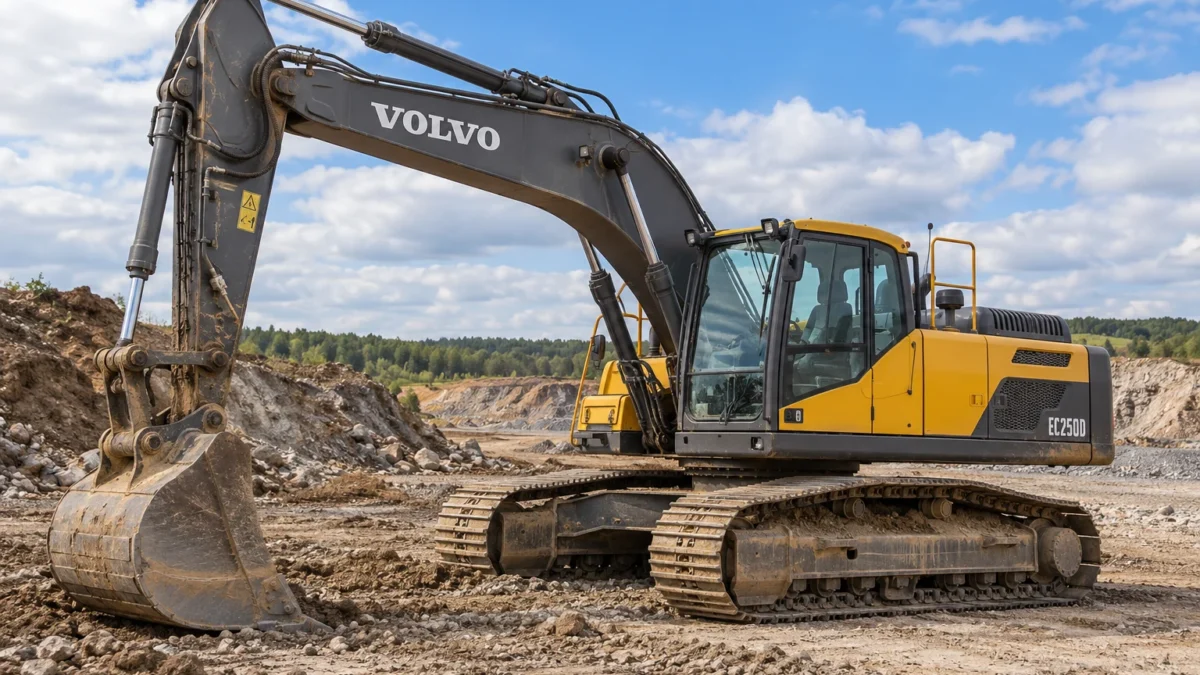
Modern Volvo Construction Equipment is built to deliver impressive power, productivity and fuel efficiency, but newer diesel engines also rely on increasingly complex emissions systems.
Depending on the model, year, engine and emissions standard, a Volvo excavator, wheel loader, articulated hauler or other piece of construction equipment may use a combination of:
- Diesel Exhaust Fluid (DEF)
- Selective Catalytic Reduction (SCR)
- Diesel Particulate Filter (DPF)
- Diesel Oxidation Catalyst (DOC)
- Exhaust Gas Recirculation (EGR)
- NOx sensors
- Exhaust temperature sensors
- Differential pressure sensors
- DEF pumps and heaters
- DEF dosing injectors
- Aftertreatment control modules
- Engine derate strategies
When these systems are working properly, the operator may barely notice them.
When something fails, however, an emissions fault can cause warning lights, repeated regeneration requests, reduced engine power, limited RPM, increased downtime and potentially an engine derate.
For contractors working on a deadline, a Volvo machine sitting because of an aftertreatment fault can quickly become considerably more expensive than the component that originally failed.
At TM AG Tuning, we specialize in tuning and electronic solutions for agricultural, construction, forestry and heavy equipment.
For supported Volvo Construction Equipment applications, we can help identify engine and emissions-related issues and determine what tuning options are available.
For machines and applications where emissions modification is legally permitted, this can include solutions involving DEF, DPF, SCR and EGR systems.
What Is DEF on Volvo Construction Equipment?
DEF stands for Diesel Exhaust Fluid.
DEF is a fluid used as part of a diesel engine’s Selective Catalytic Reduction system, normally referred to as SCR.
One important distinction is that DEF is not normally injected into the engine.
It is injected into the exhaust system.
DEF is made from high-purity urea and deionized water. As it enters the hot exhaust stream, it participates in a chemical process inside the SCR catalyst that helps convert harmful nitrogen oxides, commonly called NOx, into primarily nitrogen and water.
In simple terms:
DEF + SCR = a system designed to reduce NOx emissions after combustion has already taken place.
On a modern Volvo construction machine, the DEF/SCR system can involve much more than simply filling another tank.
Depending on the engine and emissions configuration, the system may include:
- DEF tank
- DEF level sensor
- DEF temperature sensor
- DEF quality sensor
- DEF heater
- DEF pump or supply module
- Heated DEF lines
- DEF dosing injector
- SCR catalyst
- Upstream NOx sensor
- Downstream NOx sensor
- Exhaust temperature sensors
- Wiring and electrical connectors
- Aftertreatment control module
- Engine ECU communication
This is why a DEF warning on a Volvo loader or excavator does not automatically mean the machine is simply low on DEF.
The problem could be somewhere else in the SCR system.
Common Volvo DEF and SCR Problems
DEF and SCR systems operate in extremely harsh environments.
Construction equipment regularly works around:
- Dust
- Mud
- Snow
- Extreme heat
- Extreme cold
- Vibration
- Moisture
- Long operating hours
- Extended idle time
Over time, problems can develop.
Common DEF and SCR-related issues may include:
DEF pump failure
If the pump cannot build the required pressure, the system may be unable to inject the proper amount of DEF.
DEF injector or doser problems
DEF can crystallize around the dosing system and interfere with proper operation.
NOx sensor failures
Modern SCR systems depend heavily on NOx sensor feedback. A failed or inaccurate sensor can result in emissions faults even when the engine itself is mechanically healthy.
DEF heater faults
This is particularly important for equipment operating in Canada and northern climates because DEF freezes at approximately -11°C. The system is designed around this characteristic, but heater or electrical problems can cause faults.
DEF quality faults
The system may detect incorrect DEF concentration, contamination or sensor readings outside expected parameters.
SCR efficiency faults
The engine controller may determine that NOx conversion through the SCR catalyst is below the expected efficiency.
Electrical problems
Damaged harnesses, corroded connectors and communication issues can cause faults that appear to be an emissions-component problem.
Can a DEF Problem Derate a Volvo Machine?
Yes.
On many modern diesel engines, emissions faults can eventually trigger an engine derate.
The exact strategy depends on the Volvo model, engine, software and emissions standard.
A problem may initially begin with nothing more than a warning.
If the fault remains active, the machine may eventually experience:
- Reduced horsepower
- Reduced torque
- Limited engine RPM
- Reduced travel speed
- Limited operating performance
- Progressive derate
- Severe inducement or restricted operation
This is one reason contractors become frustrated with aftertreatment failures.
The engine itself may still be capable of producing full power, but the electronic control system has determined that the emissions system is not operating correctly.
What Is a DPF on Volvo Construction Equipment?
DPF stands for Diesel Particulate Filter.
A DPF has a completely different job from the DEF/SCR system.
A diesel engine naturally produces particulate matter during combustion.
This particulate matter is commonly referred to as soot.
The DPF is installed in the exhaust system and physically captures much of this soot instead of allowing it to exit the exhaust.
As the machine operates, soot gradually accumulates inside the filter.
Eventually, that soot needs to be removed.
This is where DPF regeneration comes in.
What Is a DPF Regeneration?
A regeneration, commonly called a regen, is the process of increasing exhaust temperature so accumulated soot inside the DPF can be oxidized.
Depending on the machine and operating conditions, regeneration may occur automatically while the machine is working.
In other situations, the machine may request a parked or manual regeneration.
The engine management system may use information from several sensors to determine what is happening inside the DPF.
These can include:
- Differential pressure
- Exhaust temperature
- Engine operating hours
- Fuel consumption
- Engine load
- Estimated soot accumulation
- Previous regeneration history
The ECU then calculates or estimates how much soot is stored in the filter.
Why Do Volvo DPF Systems Cause Problems?
A DPF itself is relatively simple compared with some other emissions systems.
The complication comes from everything required to monitor and regenerate it.
A regeneration can fail because of:
- Faulty temperature sensor
- Faulty differential pressure sensor
- Exhaust leak
- Engine fault
- Incorrect operating conditions
- Excessive idle time
- Repeatedly interrupted regenerations
- Excessive engine soot production
- Injector problems
- Turbocharger problems
- EGR problems
- DPF ash accumulation
- A physically damaged or restricted filter
It is also important to understand the difference between soot and ash.
Soot can normally be burned during regeneration.
Ash cannot.
As operating hours accumulate, noncombustible ash gradually remains inside the DPF.
Eventually, a DPF may require professional cleaning or replacement even if the regeneration system itself is working correctly.
What Happens When a Volvo DPF Becomes Plugged?
A heavily loaded DPF can increase exhaust backpressure.
The machine may begin displaying warnings or diagnostic codes.
Depending on the severity, the operator may experience:
- Frequent regeneration
- Regeneration requests
- Failed regeneration
- DPF warning light
- Check-engine warning
- High soot-load warnings
- Reduced engine performance
- Increased exhaust temperature
- Engine derate
- Restricted engine RPM
Eventually, the machine may require service before normal operation can continue.
What Is EGR on a Volvo Diesel Engine?
EGR stands for Exhaust Gas Recirculation.
Unlike DEF and DPF systems, which operate primarily in the exhaust system, EGR directly affects what enters the engine.
The EGR system redirects a controlled portion of exhaust gas back into the intake.
Why would an engine intentionally breathe exhaust?
Because introducing a controlled quantity of exhaust gas can reduce peak combustion temperature.
Lower combustion temperatures help reduce the formation of nitrogen oxides, or NOx.
A typical EGR system may include:
- EGR valve
- EGR cooler
- EGR piping
- EGR temperature sensors
- Pressure sensors
- Position sensors
- Intake throttle or air-control components
The engine ECU constantly controls the amount of EGR depending on engine speed, load, temperature and operating conditions.
Why Can EGR Become a Problem?
Diesel exhaust contains soot.
The engine intake system can also contain oil vapour from the crankcase ventilation system.
When soot and oil contamination mix together, deposits can develop inside the EGR and intake systems.
Over thousands of operating hours, this can contribute to:
- Carbon buildup
- Restricted intake passages
- EGR valve sticking
- EGR cooler restriction
- EGR cooler leakage
- Sensor contamination
- Reduced airflow
- Engine fault codes
An EGR cooler is another potential failure point.
If a cooler develops an internal leak, coolant can potentially enter areas where it should not be.
DEF vs DPF vs EGR: What Is the Difference?
These three systems are often grouped together as “the emissions system,” but they perform completely different jobs.
EGR
Exhaust Gas Recirculation
EGR sends a controlled amount of exhaust gas back through the engine to reduce combustion temperatures and NOx formation.
DPF
Diesel Particulate Filter
The DPF traps particulate matter or soot produced by the engine.
It periodically needs to regenerate to burn accumulated soot.
DEF / SCR
Diesel Exhaust Fluid / Selective Catalytic Reduction
DEF is injected into the exhaust and used by the SCR catalyst to reduce NOx after combustion.
A modern engine may use all three technologies together.
That means properly diagnosing a Volvo emissions problem is important.
Replacing a NOx sensor will not repair a plugged DPF.
Cleaning a DPF will not repair a failed EGR valve.
Replacing an EGR valve will not fix a DEF pump that cannot build pressure.
Why Do Owners Consider DEF, DPF and EGR Delete on Volvo Construction Equipment?
The biggest reason is usually one word:
Downtime.
Construction equipment makes money when it is working.
An excavator, loader or articulated haul truck experiencing a serious emissions fault may prevent an entire job from progressing normally.
For applications where emissions modification is legally permitted, some equipment owners choose to simplify the emissions system to reduce the number of components capable of placing the machine into an emissions-related derate.
The potential operational benefits owners commonly seek include:
- Fewer emissions-related breakdowns
- Reduced aftertreatment complexity
- No DPF regeneration when the DPF system is lawfully removed
- No DPF soot-loading issues
- No DPF ash accumulation
- No DEF consumption when the SCR system is lawfully removed
- Reduced dependence on DEF pumps and dosing equipment
- Reduced dependence on NOx sensors
- Reduced EGR-related intake contamination
- Elimination of certain emissions-related derate conditions
- Reduced downtime associated specifically with aftertreatment failures
This does not mean every engine problem disappears after an emissions modification.
A Volvo machine can still experience problems with:
- Injectors
- Fuel pressure
- Turbocharger
- Engine compression
- Sensors
- Wiring
- Cooling system
- Transmission
- Hydraulic system
- CAN communication
- Engine ECU
- Fuel contamination
Proper diagnosis remains extremely important.
Benefits of DPF Removal
For equipment operating in a situation where DPF modification is legally permitted, one of the main reasons operators investigate DPF removal is eliminating the soot-storage and regeneration cycle.
When correctly calibrated for an eligible application, this may eliminate problems directly associated with:
- DPF regeneration
- DPF soot loading
- DPF ash accumulation
- Differential pressure caused by a restricted filter
- DPF replacement
- Failed regeneration
- DPF-related derates
There can also be a reduction in exhaust restriction when comparing an unrestricted exhaust system to a badly plugged or ash-loaded DPF.
However, it would be incorrect to claim that every properly functioning DPF creates a huge restriction.
A healthy factory DPF is designed to operate within the engine manufacturer’s expected exhaust-pressure limits.
The biggest improvements are generally noticed when comparing an unrestricted system against a DPF that was already heavily restricted or malfunctioning.
Benefits of DEF and SCR Removal
Where legally permitted and correctly calibrated, removal of the DEF/SCR system can eliminate dependence on many of the components associated with DEF delivery and NOx conversion.
Potential failure points that may no longer affect machine operation can include:
- DEF pump
- DEF injector
- DEF heater
- DEF quality sensor
- DEF level sensor
- DEF lines
- Certain NOx sensors
- SCR catalyst
- DEF dosing faults
- SCR efficiency faults
It also eliminates the need to purchase and refill DEF for that application.
The larger benefit for many equipment owners, however, is not the cost of the DEF itself.
It is reducing the possibility that a relatively small emissions component causes a much more expensive period of downtime.
Benefits of EGR Removal
For eligible applications, an EGR-off calibration prevents exhaust gas from being intentionally recirculated through the intake system.
Potential benefits operators seek include:
- Reduced soot entering the intake
- Reduced EGR-related carbon buildup
- Reduced EGR valve problems
- Reduced EGR cooler issues
- Cleaner intake system
- Simplified engine airflow
- Removal of some EGR-related fault conditions
The important part is that the ECU calibration needs to match the mechanical configuration.
Simply installing a blocking plate without properly addressing the engine management system is not equivalent to a professionally calibrated solution.
Does Deleting DEF, DPF and EGR Increase Horsepower?
An emissions delete and a horsepower tune are not the same thing.
This is an important distinction.
A Volvo machine can potentially have its emissions strategy changed while retaining approximately factory horsepower.
Performance tuning is a separate process.
Increasing power can involve changes to parameters such as:
- Engine torque limits
- Fuel quantity
- Injection strategy
- Boost targets
- Torque request
- Smoke limitation
- Engine protection limits
- Rail pressure, where applicable
The amount of additional power that is appropriate depends on the particular Volvo machine.
The engine may be capable of substantially more power, but the rest of the machine also has to handle it.
That includes:
- Transmission
- Torque converter
- Final drives
- Axles
- Cooling system
- Hydraulic system
- Driveline
For construction equipment, a well-designed tune should concentrate on usable torque and productivity instead of simply producing the highest possible horsepower number.
Will a Volvo Delete Improve Fuel Economy?
Possibly, but there should never be a blanket promise that every machine will achieve a particular percentage of fuel savings.
Fuel consumption depends on:
- Engine load
- Operator
- Application
- Idle time
- Machine condition
- Terrain
- Hydraulic demand
- Travel speed
- Engine calibration
- Previous DPF regeneration frequency
- Previous emissions-system condition
If the machine was repeatedly performing active regenerations, eliminating that regeneration strategy in an eligible application can eliminate fuel associated with those events.
If a DPF was badly restricted, correcting the restriction may also improve engine operating efficiency.
However, for many construction companies the bigger financial benefit is uptime rather than fuel economy.
Saving a few litres of diesel is useful.
Keeping a loader, excavator or haul truck operating instead of sitting in derate can be considerably more valuable.
Volvo Wheel Loader DEF, DPF and EGR Delete
Volvo is well known for its wheel loader lineup.
Depending on model year and emissions configuration, modern Volvo loaders can incorporate sophisticated engine and aftertreatment systems.
Owners searching for help may commonly use terms such as:
Volvo wheel loader DEF delete
Volvo wheel loader DPF delete
Volvo wheel loader EGR delete
Volvo loader emissions delete
Volvo loader derate
Volvo loader DPF regeneration problem
Volvo SCR fault
Volvo DEF fault
TM AG Tuning can review supported applications to determine what ECU and aftertreatment systems are installed and what options are available.
Popular Volvo loader families include machines within the L-series range.
Always send us the exact model and serial number because engine and emissions systems can vary between model years and markets.
Volvo Excavator DEF, DPF and EGR Delete
Excavators are another major part of Volvo Construction Equipment’s product range.
An excavator experiencing reduced engine power can have a major effect on hydraulic performance and cycle times.
If the cause is an emissions-related derate, the operator may notice that the machine still runs but no longer performs the way it normally does.
Common customer searches include:
Volvo excavator DEF delete
Volvo excavator DPF delete
Volvo excavator EGR delete
Volvo excavator emissions delete
Volvo excavator derate
Volvo excavator won’t regen
Volvo excavator SCR fault
Volvo excavator NOx sensor fault
TM AG Tuning can help determine whether the issue is related to the engine calibration, aftertreatment system or another machine problem.
Volvo Articulated Hauler DEF, DPF and EGR Delete
Volvo has a long history with articulated haulers, and these machines regularly operate under extremely heavy load.
In quarry, earthmoving, mining and construction applications, downtime on an articulated truck can quickly reduce the productivity of the entire operation.
A haul truck experiencing an emissions-related power reduction may affect:
- Cycle times
- Loader productivity
- Material movement
- Fuel usage
- Job scheduling
- Overall production
For supported applications, TM AG Tuning can review Volvo articulated hauler engine and emissions configurations and determine what solutions may be available.
Volvo L60, L70, L90, L110, L120, L150, L180 and L220 Tuning
Customers often search by exact machine model rather than simply searching for “Volvo loader tuning.”
Depending on year and market, TM AG Tuning may be able to assist with various Volvo wheel loader families.
This can include inquiries for machines such as:
- Volvo L60
- Volvo L70
- Volvo L90
- Volvo L110
- Volvo L120
- Volvo L150
- Volvo L180
- Volvo L220
- Other Volvo Construction Equipment models
Because Volvo has produced these model families across many generations, the model number alone is not enough to identify the engine control system.
When contacting us, send:
- Exact Volvo model
- Model year
- Serial number
- Engine model
- Engine ECU number if available
- Aftertreatment controller information if available
- Current diagnostic trouble codes
- Photos of ECU labels
- Photos of engine identification labels
This allows us to identify the electronic system much faster.
Volvo Construction Equipment Derate Problems
A derate does not automatically mean the ECU needs to be tuned.
There is normally a reason the engine controller has requested reduced power.
Potential causes include:
- DEF system fault
- NOx sensor fault
- SCR efficiency problem
- DPF soot level
- Failed regeneration
- Exhaust temperature sensor
- Differential pressure sensor
- EGR fault
- Boost problem
- Fuel pressure fault
- Coolant temperature
- Engine protection event
- CAN communication fault
Before replacing expensive parts, it is worth identifying exactly which controller is requesting the derate and why.
Clearing the fault code is also not necessarily the same as fixing the problem.
If the ECU detects the same condition again, the fault and derate may return.
Does Clearing Volvo Fault Codes Remove a Derate?
Sometimes temporarily.
Usually not permanently.
If the underlying condition still exists, the controller will normally detect the problem again.
For example, clearing a DPF differential-pressure code does not physically clean a plugged filter.
Clearing a NOx sensor fault does not repair a failed sensor.
Clearing a DEF pressure code does not repair a DEF pump.
This is why diagnostic information is extremely valuable when contacting TM AG Tuning.
Send us a clear picture or screenshot of the codes instead of only saying:
“The machine is derated.”
The actual diagnostic code can tell us much more.
Why Proper Volvo ECU Calibration Matters
Modern Volvo equipment relies on communication between numerous controllers.
The engine ECU may communicate with:
- Aftertreatment controller
- Transmission controller
- Vehicle ECU
- Instrument cluster
- Hydraulic controllers
- Telematics system
- Other machine modules
The ECU also performs much more than simply controlling fuel injection.
It may calculate:
- Engine torque
- Soot loading
- Exhaust temperatures
- DPF regeneration
- EGR flow
- SCR performance
- NOx conversion
- Engine protection
- Torque limitation
- Derate status
This is why a quality calibration needs to address the correct engine-management strategies.
Poor-quality tuning can potentially lead to:
- Warning lights
- Fault codes
- Incorrect torque calculation
- Poor drivability
- Excessive smoke
- Communication problems
- Regeneration issues
- Engine protection problems
TM AG Tuning concentrates on properly developed calibrations for supported applications rather than simply clearing diagnostic trouble codes.
Can TM AG Tuning Help With a Volvo That Is Already Derated?
Yes, we can review the information and help determine what is causing the machine to derate.
Volvo ECM and ACM Bench Tuning
For supported Volvo Construction Equipment DEF, DPF and EGR tuning, the engine ECM and aftertreatment control module (ACM) must be removed from the machine and shipped to TM AG Tuning.
These Volvo applications are not read remotely.
We require both modules so we can properly read the original software directly from the controllers on our bench.
What Needs to Be Sent to TM AG Tuning?
For Volvo Construction Equipment applications, send us:
- Engine ECM
- Aftertreatment Control Module (ACM)
Once the ECM and ACM arrive at TM AG Tuning, we connect to the modules using professional bench-programming equipment and read the original software.
The files can then be prepared for the required tuning solution before the modules are programmed and returned.
Why Do We Need Both the ECM and ACM?
Modern Volvo Construction Equipment uses multiple electronic controllers to manage the engine and emissions system.
The ECM controls major engine functions such as:
- Fuel injection
- Engine torque
- Boost control
- EGR operation
- Engine protection
- Diagnostic functions
The ACM manages and monitors much of the exhaust aftertreatment system, including functions associated with:
- DEF dosing
- SCR operation
- DPF monitoring
- DPF regeneration
- NOx sensors
- Exhaust temperature sensors
- Aftertreatment diagnostics
- Emissions-related derates
Because the engine and aftertreatment systems communicate with each other, properly tuning a supported Volvo application requires access to both controllers.
Simply modifying one controller while ignoring the other can leave the machine with active faults, warning messages, derates or communication problems.
Volvo Tuning Process
The process is straightforward:
- Remove the Volvo ECM and ACM from the machine.
- Ship both modules to TM AG Tuning.
- We read the original software from both modules on the bench.
- The required tuning files are prepared.
- The ECM and ACM are programmed.
- The modules are returned for installation back into the machine.
If you are unsure which modules need to be removed, send us your Volvo model, serial number, engine information and photos of the ECM and ACM labels before shipping.
TM AG Tuning can confirm what is required for your specific machine.
Why Choose TM AG Tuning for Volvo Construction Equipment Tuning?
TM AG Tuning specializes in agricultural, construction, forestry and heavy equipment tuning.
Our experience extends far beyond passenger vehicles and highway pickups.
Heavy equipment requires a different approach.
The objective is not simply maximum horsepower.
For working equipment, the priorities are:
Reliability.
Uptime.
Usable torque.
Proper engine operation.
Support when something goes wrong.
We support customers and dealers across a wide range of diesel equipment applications with both remote and bench tuning solutions.
If you are dealing with a Volvo emissions problem, engine derate or tuning question, send us the machine information and fault codes.
We can determine whether we support the application and what is required.
Contact TM AG Tuning About Your Volvo Construction Equipment
If you have a Volvo excavator, wheel loader, articulated hauler or other Volvo Construction Equipment machine experiencing DEF, DPF, EGR, SCR or engine-related problems, contact TM AG Tuning.